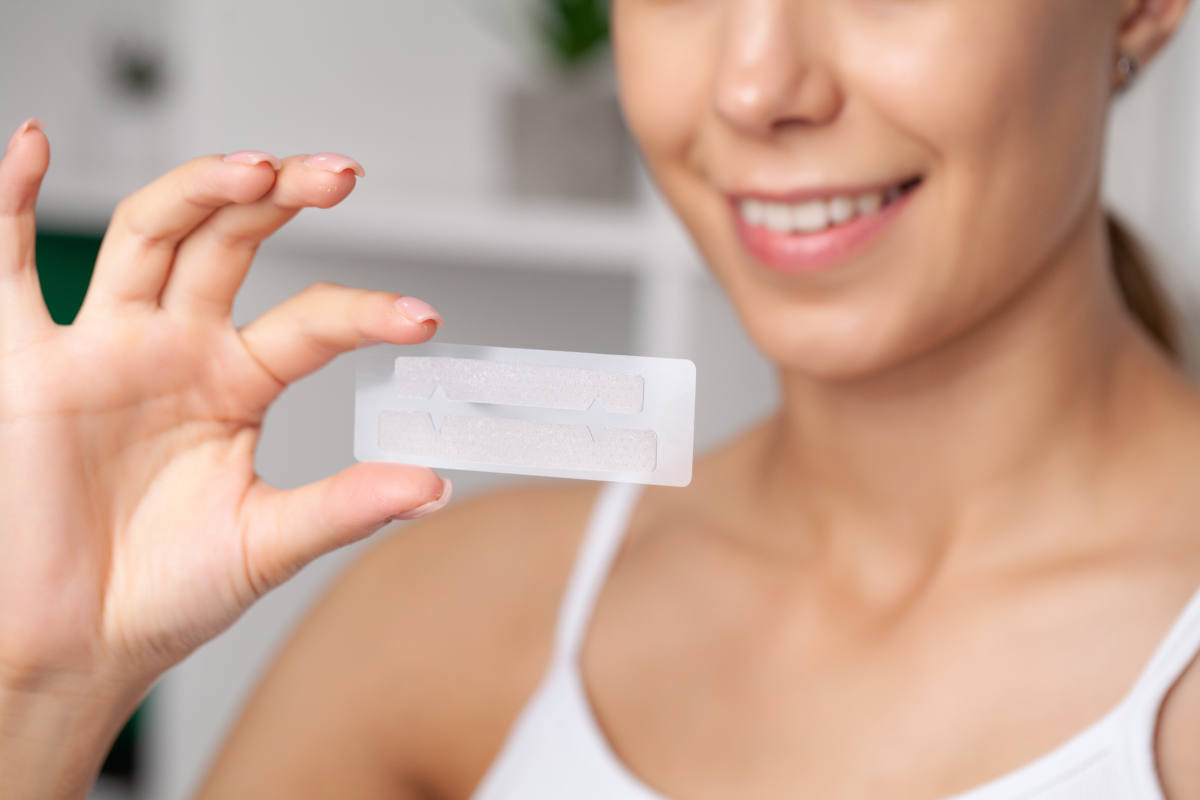
Do not brush immediately before applying whitening strips, and wait about 30 minutes to brush after removing them. The ideal routine: rinse with water or brush at least 30 minutes before application so the strips grip clean but non-irritated enamel, apply the strips, remove them, rinse the gel away with water, and brush gently half an hour later. Brushing right before application microscopically irritates gums and strips away protective saliva proteins, increasing sensitivity, while brushing immediately after works abrasives over enamel that peroxide has left temporarily softened.
The Right Order, Step by Step
- 30+ minutes before: brush normally or simply rinse. If your teeth are visibly free of food and plaque, a water rinse is enough. If you brush, do it at least half an hour ahead.
- Dry the front of your teeth lightly with a clean tissue. Strips adhere better and the gel stays where it belongs.
- Apply the strips gel side against the teeth, aligned with the gumline without overlapping onto the gums. Fold the excess behind the tooth edges.
- Wait the time printed on YOUR product's box. Usually 30 to 60 minutes depending on the formula. Longer is not better; it is just more sensitivity.
- Remove and rinse your mouth with water to clear residual gel. You can also wipe the teeth gently with a soft cloth or finger.
- Wait about 30 minutes, then brush with a soft brush and gentle pressure. A toothpaste for sensitive teeth is a good pairing during a whitening course.
Why Not Brush Right Before?
Two reasons, both about sensitivity rather than effectiveness:
Gum irritation. Brushing mechanically stresses the gum margin. Applying peroxide gel to freshly brushed gum tissue is the classic recipe for the white gum blanching and stinging that many strip users report. Giving tissue 30 minutes to settle prevents most of it.
The pellicle layer. Saliva constantly rebuilds a thin protein film over enamel. Brushing removes it. That film slightly buffers how aggressively peroxide interacts with the tooth surface, so stripping it seconds before treatment maximizes sensitivity for no whitening benefit. Whitening gel penetrates the pellicle without difficulty; a clean tooth and a just-scrubbed tooth whiten the same.
What DOES block whitening: actual plaque and food debris. That is why the answer is "rinse, or brush well ahead," never "apply strips onto a dirty mouth."
Why Wait to Brush After?
Peroxide temporarily softens the outermost enamel surface and opens the microscopic pores of the tooth. Both effects reverse within roughly 30 to 60 minutes as saliva remineralizes the surface. Brushing during that window, especially with a whitening toothpaste (the most abrasive category), wears enamel you will not get back. Rinse with water immediately after removing strips, then let saliva do its repair work before the brush comes out.
The same logic applies to what you consume: the hour after strips is when enamel pores are most open, so dark drinks (coffee, tea, red wine, cola) and strongly pigmented foods stain more easily. Many users adopt a simple "white diet" for a few hours after each session.
Common Mistakes That Cause Sensitivity
- Brushing hard right before or right after a session. Covered above, and responsible for a large share of strip complaints.
- Doubling session time or frequency. Twice as long does not mean twice as white. It means zingers: those brief sharp jolts in individual teeth.
- Overlapping strips onto gums. Peroxide belongs on enamel. Trim or fold strips to follow your gumline.
- Using strips on untreated dental problems. Cavities, cracked teeth, exposed roots, and leaking fillings turn whitening into real pain. If any tooth already hurts with cold, see your dentist before starting a whitening course, not after.
- Whitening restorations. Crowns, veneers, and fillings do not whiten. If your front teeth carry visible restorations, whitening can create mismatched shades; a dentist can tell you what result to expect before you spend the money.
If sensitivity does show up, spacing sessions every other day, shortening wear time, and using a sensitive-formula toothpaste resolves it for most people. Sensitivity that persists for days after stopping, or pain concentrated in one tooth, is a reason to consult your dentist. Our full guide to whitening with sensitive teeth covers the gentler routes in detail.
Does the Order Change the Whitening Result?
Barely. Timing rules exist to protect comfort and enamel, not to boost bleaching. Strips whiten the same whether you brushed 30 minutes ahead or just rinsed. What actually determines your result: the peroxide concentration of the product, total days of consistent use, your starting shade, and whether your discoloration is surface staining (responds well) or intrinsic (responds slowly or needs professional treatment). We break down realistic expectations in our guide to whether whitening strips damage teeth and how long whitening results last.
FAQ
Do you brush your teeth after whitening strips?
Yes, but wait about 30 minutes. Rinse with water immediately after removing the strips, then brush gently once saliva has remineralized the enamel surface.
Should I brush my teeth before using whitening strips?
Not immediately before. Brush at least 30 minutes ahead, or simply rinse with water if your teeth are clean. Strips need plaque-free enamel, not freshly scrubbed enamel.
Can I use mouthwash after whitening strips?
Rinse with plain water first. If you like mouthwash, prefer an alcohol-free formula and wait the same 30 minutes; alcohol on peroxide-treated gums stings.
How long after whitening strips can I eat and drink?
Water anytime. Wait 30 to 60 minutes for anything else, and keep dark, staining drinks to a minimum for a few hours after each session.
Why do my gums turn white after whitening strips?
Temporary peroxide blanching from gel contact, usually from strips overlapping the gumline or brushing right before a session. It fades within hours; realign the strips and adjust your brushing timing. If irritation persists or worsens, take a break and mention it to your dentist.